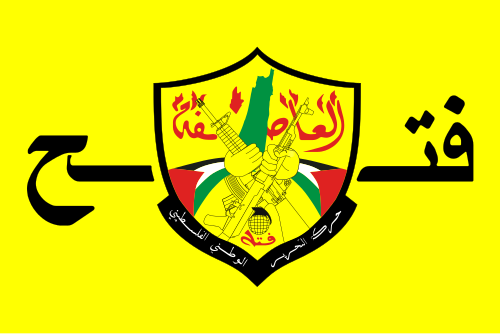

Palestine party
Fatah
حركة فتحSecular-nationalist party founded by Yasser Arafat, dominant within the PLO and the Palestinian Authority.
- Founded
- 1959
- Current leader
- Mahmoud Abbas
- Founders
- Yasser Arafat; Khalil al-Wazir; Salah Khalaf
Position — compass as of 2026-06-08
First-pass hand-coded estimate; pending second-pass external review. See methodology for the rubric.
Across the dataset
Open full comparison →Nearest
Closest by average Euclidean distance across all axes.
Most divergent
Farthest by the same metric. Useful for "anti-axis" framing.
Position — all axes
Briefs about Fatah
Comparative political-science briefs pairing this party with others. 1 brief on file.
Members & affiliated figures
Politicians currently identified with this party — leaders, ministers, MPs, and other active figures. All affiliated politicians →
Recent events
Political events involving this party — formations, mergers, leadership changes, designation shifts. All events at /pulse →
-
Abbas indefinitely postpones the 2021 Palestinian elections
On 29 April 2021 Mahmoud Abbas called off what would have been the first Palestinian elections in 15 years, blaming Israel's refusal to guarantee voting in East Jerusalem. Critics saw it as fear of a Fatah split and Hamas gains. The cancellation entrenched the rule of a president whose four-year term had expired in 2009 and who governs by decree, and triggered protests; the dissident Nizar Banat died in PA custody weeks later.
-
Battle of Gaza: Hamas takes over
After the 2006 Palestinian legislative election won by Hamas and the breakdown of the unity government, Hamas defeated Fatah forces in Gaza in a week-long armed conflict ending 2007-06-15. Created the Gaza/West Bank political split that persists today: Hamas governs Gaza, Fatah governs the West Bank under occupation.
-
Hamas wins Palestinian Legislative Council election
Hamas takes 74 of 132 seats in the PLC election, ending decades of Fatah dominance and precipitating the Western boycott of the PA government. The Battle of Gaza eighteen months later was the direct sequel.
-
Abbas elected Palestinian president after Arafat
On 9 January 2005 Mahmoud Abbas (Abu Mazen) was elected president of the Palestinian Authority following Yasser Arafat's death, with about 62% of the vote. A long-time Fatah negotiator opposed to the armed Second Intifada, he committed to talks with Israel and security coordination — a sharp shift in declared strategy from Arafat's era.
-
Yasser Arafat dies in Paris
Arafat dies at the Percy military hospital outside Paris after weeks of declining health. His death ends 35 years of Fatah leadership and ushers in Mahmoud Abbas as PA president after a January 2005 election.
-
Arafat returns from exile to head the Palestinian Authority
On 1 July 1994, following the Oslo Accords, Yasser Arafat returned to Gaza after 27 years in exile to lead the newly created Palestinian Authority, becoming its elected president in 1996. Having shared the 1994 Nobel Peace Prize, he governed an autonomy hemmed in by continued occupation and settlement growth — and the gap between the promise of statehood and the reality on the ground fed the collapse into the Second Intifada in 2000.
-
Barghouti consistently leads PA presidential polling
Imprisoned Fatah figure Marwan Barghouti consistently leads PA presidential polling — when included — by wide margins. His name regularly appears in Israeli-Palestinian prisoner swap discussions; releasing him is widely seen as a meaningful possibility post-war.
Declared vs. behavioral
For the axes below, this party's declared position (what the party says in its platform / official rhetoric) diverges from its behavioral position (its record of votes, coalition choices, or public actions). The spread itself is the methodological point — capturing the gap that a single composite score collapses.
- Civil liberties spread: 6.0D: +3.0 B: -3.0 C: -6.0
- Liberal democracy spread: 8.0D: +5.0 B: -3.0 C: -5.0
Lens spreads are currently hand-coded on a curated set of cases where the gap is well-documented. Document-grounded scoring against the party's own platform documents (declared) and its voting / coalition record (behavioral) will scale this across the dataset. See methodology for the full lens-system roadmap.
On the record
Statements issued by Fatah as an organisation — press releases, manifesto excerpts, platform language — that have passed verification. Each carries a year, the context, and at least one source citation. Browse the full corpus or play the "Who said it?" game.
-
Armed struggle is a strategy and not a tactic.
-
Complete liberation of Palestine, and eradication of Zionist economic, political, military and cultural existence.
-
Establishing an independent democratic state with complete sovereignty on all Palestinian lands, and Jerusalem is its capital city, and protecting the citizens' legal and equal rights without any racial or religious discrimination.
Source documents
Texts the scoring pipeline reads — manifestos, speeches, platforms. Each document's verbatim content backs the position score above; the model cites specific phrases from these texts when scoring. All documents →
-
Article English 2018-10-23 Fatah-led Palestinian Authority behavioral civil-liberties / press-freedom record: HRW found the PA "routinely arrest[s] and torture[s] peaceful critics and opponents" in the West Bank, and held 221 Palestinians in administrative detention without charge or trial (Jan 2017–Aug 2018). HRW report "Two Authorities, One Way, Zero Dissent" (23 Oct 2018).
The Fatah-led Palestinian Authority in the West Bank and Hamas authorities in Gaza routinely arrest and torture peaceful critics and opponents, Human Rights Watch said in a report released today. Palestinian Authority…
-
Manifesto Arabic 1988-11-15 Palestinian Declaration of Independence (the Algiers Declaration), 15 November 1988 (English translation of Arabic)
Despite the historical injustice done to the Palestinian Arab people in its displacement and in being deprived of the right to self-determination following the adoption of General Assembly resolution 181 (II) of 1947,…
-
Manifesto Arabic 1968-07-17 The Palestinian National Charter — Resolutions of the Palestine National Council, 1–17 July 1968 (English translation of Arabic original)
Article 1: Palestine is the homeland of the Arab Palestinian people; it is an indivisible part of the Arab homeland, and the Palestinian people are an integral part of the Arab nation. Article 8: The phase in their…
-
Arabic 1964-01-01 Fatah Constitution (Principles, Goals, Method), 1960s (English translation of Arabic original)
Article (7) The Zionist Movement is racial, colonial and aggressive in ideology, goals, organisation and method. Article (8) The Israeli existence in Palestine is a Zionist invasion with a colonial expansive base, and…
Sources
Per-field citations for the verified claims above. Other fields (notably the compass scores) remain hand-coded priors and are marked unverified until they pass the methodology pipeline — see methodology.
- founded_year en.wikipedia.org 2026-06-06 Officially launched 1959 in Kuwait; armed action began 1965
- current_leader_text en.wikipedia.org 2026-06-06 Chairman of Fatah since 2004; PA President since 2005
- founders_text en.wikipedia.org 2026-06-06 Founded by Yasser Arafat and others
How to cite
Each record carries a retrieval date because the dataset is live — individual entries update as verification deepens. Use the per-record citation when referencing this specific profile; use the dataset citation below when referencing the project as a whole.
In-text: (Gara, 2026)
Per-record citation
APA 7Reference list · academic default
Gara, T. (2026). Fatah [Party profile]. Tayyar: A MENA political-position dataset. Retrieved September 20, 2026, from https://tarekgara.com/tayyar/p/fatah
Chicago author-dateCommon in political-science journals
Gara, Tarek. 2026. "Fatah." Party profile, Tayyar: A MENA political-position dataset. Accessed September 20, 2026. https://tarekgara.com/tayyar/p/fatah.
BibTeXFor LaTeX / Zotero / reference managers
@misc{tayyar-fatah,
  title     = {{Fatah}},
  author    = {Gara, Tarek},
  year      = {2026},
  publisher = {Tayyar: A MENA political-position dataset},
  type      = {Party profile},
  url       = {https://tarekgara.com/tayyar/p/fatah},
  urldate   = {2026-09-20},
  note      = {First-pass entry; second-pass external review planned before publication.}
} Dataset / working-paper citation
If you're citing Tayyar as a project rather than this individual record.
APA 7Preprint
Gara, T. (2026). Tayyar: A MENA political-position dataset [Preprint]. Retrieved September 20, 2026, from https://tarekgara.com/tayyar/paper
BibTeXPreprint
@unpublished{tayyar-preprint,
  title  = {{Tayyar: A MENA political-position dataset}},
  author = {Gara, Tarek},
  year   = {2026},
  type   = {Preprint},
  url    = {https://tarekgara.com/tayyar/paper},
  urldate = {2026-09-20},
  note   = {Living document, regenerated from the live dataset on page load.}
} First-pass entry; second-pass external review planned before publication.